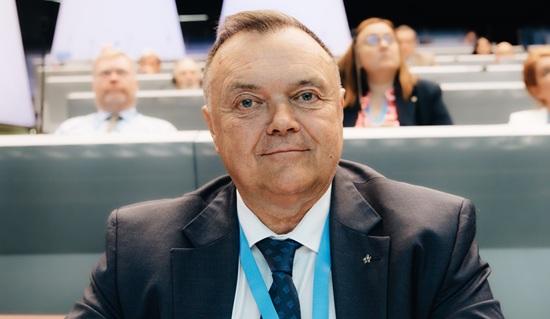

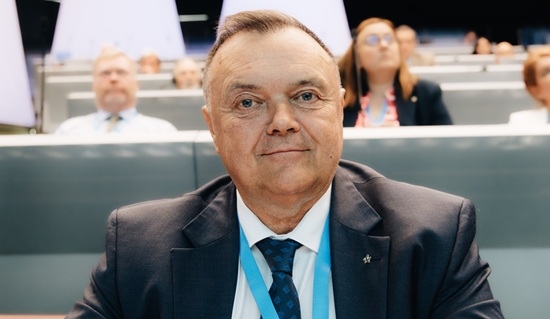
Dr. Ivan Petrov: The future of logistics belongs to those who can adapt
The logistics industry is undergoing a profound transformation driven by digitalization, artificial intelligence, sustainability targets and geopolitical shifts. In this exclusive interview, former FIATA President and Transexpress General Manager Dr. Ivan Petrov shares his insights on the future of freight forwarding, the rise of paperless trade, the impact of AI and the growing importance of alternative transport corridors.
During your tenure as President of FIATA, the global logistics sector was grappling with post-pandemic recovery and supply chain crises. What was the most critical lesson you learned during that period, and how did those experiences shape logistics strategies worldwide?
I am sure that every FIATA President throughout its 100-year history has faced significant challenges shaped by the circumstances of their time, often resulting in major disruptions for our industry. The answer has always been the strength of FIATA as a well-established global association—the global voice of freight forwarders and logistics professionals whic is lead by the President himself.The FIATA President represents an institution that speaks on behalf of the global community, articulates a unified strategy, and advocates common policies.
My tenure (2021–2023) was heavily affected by the pandemic, followed by the post-pandemic recovery period and severe supply chain disruptions. One of the most significant consequences was the acceleration of vertical integration, with major carriers—particularly shipping lines—expanding into activities traditionally performed by freight forwarders. This development fundamentally changed the business environment for freight forwarders worldwide.
DIGITALIZATION AND MULTIMODALITY:
THE NEW COMPETITIVE ADVANTAGE
Today, what do you consider to be the greatest opportunity and the most significant threat facing the global logistics industry?
The greatest opportunity for logistics and freight forwarding companies lies precisely in responding to these challenges through the development of new digital solutions while maintaining a personalized, customer-centric approach.Another key factor in gaining a competitive advantage against large carriers is the multimodal approach, which differentiates freight forwarders in the marketplace. In addition, FIATA has taken a leading role among international stakeholders in advancing digitalization through initiatives such as the e-FIATA B/L and the Electronic Negotiable Multimodal FIATA B/L, both of which made substantial progress during my presidency.
The position of freight forwarders in global trade has evolved from that of “intermediaries” to “strategic solution partners.” Do you believe the industry has fully embraced this new role?
The transformation from “intermediaries” to “strategic solution partners” and, increasingly, “contractual carriers” is inevitable for modern freight forwarders. Those who fail to embrace this evolution risk losing relevance and may ultimately shift their focus to other activities, such as customs brokerage or specialized services.
EFBL: BUILDING THE FOUNDATION OF PAPERLESS TRADE
How do you evaluate the current progress of the eFBL, FIATA’s flagship initiative for paperless trade?
FIATA has established a global standard for electronic transport documents and ensured open access to this framework. Through the digitalization of the FIATA Bill of Lading, we have also created a register of authorized issuers, making the document issuance process significantly safer and more transparent.The eFBL is fully integrated with blockchain technology and represents the future of international trade documentation. However, transformation takes time, and paper-based business models remain widely used in many parts of the world.
What can you say about the impact of artificial intelligence on the logistics sector?
Artificial intelligence is a powerful tool for increasing productivity. It can automate many operational processes, reduce human error, and enable longer operational hours. As a result, the productivity of freight forwarding operations is expected to increase significantly.Given the shortage of qualified labor and changing workforce expectations, AI will play an increasingly important role in logistics operations while supporting greater efficiency and competitiveness.
THE FREIGHT FORWARDER’S ROLE IN THE GREEN TRANSITION
Emission regulations are becoming stricter in both maritime and aviation sectors. How can SMEs adapt?
Most SMEs do not own vessels or aircraft, meaning that many aspects of decarbonization remain in the hands of carriers. Nevertheless, intermodal transport—particularly rail-based solutions—and inland waterways offer some of the most environmentally friendly transport options available.The multimodal approach adopted by freight forwarders is central to reducing emissions and supporting the green transition.
Have you observed a significant increase in demand for green shipping over the past two years?
Yes, there has been a noticeable increase in demand for green shipping solutions, particularly among multinational corporations. Sustainability targets and corporate responsibility commitments are now influencing transport decisions as much as traditional cost considerations.
ALTERNATIVE CORRIDORS
NO LONGER OPTIONAL
What is your assessment of the Middle Corridor and similar alternative routes?
At FIATA, we support the development of all viable freight transport corridors, particularly those based on multimodal solutions that provide alternative routing options.As geopolitical uncertainties continue to affect global trade, the importance of diversified transport corridors is increasing. The Middle Corridor is a strong example of how resilience and flexibility are becoming essential components of global supply chains.
Vertical Integration: A Growing Challenge for Freight Forwarders
Do you believe the expansion of shipping lines into logistics services threatens fair competition?
The vertical integration of major container shipping lines represents a genuine threat to independent freight forwarders.The key to maintaining competitiveness lies in identifying niche markets and developing tailor-made solutions that large-scale providers often cannot deliver efficiently.
What advice would you give to the next generation of logistics professionals?
Our profession is highly demanding, dynamic, and intellectually rewarding. It requires a broad understanding of economics, transportation, supply chains, and logistics management.My advice is simple: invest in education and continuous learning. By building awareness and expertise, we can make our profession more attractive, more engaging, and ultimately more rewarding for future generations.